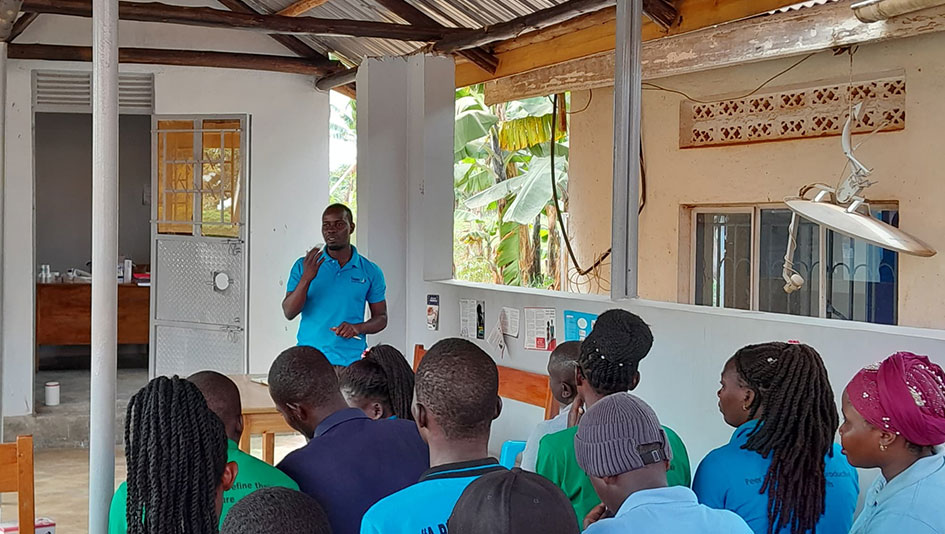
As Uganda experiences another dry spell, many farming communities are feeling the strain. Across several districts, high temperatures and shrinking water sources are leaving coffee leaves curled and other perennial crops wilting. For many rural youth who depend on agriculture for their livelihoods, climate change is no longer an abstract concept but a challenge they face every day.
Recognising climate variability as one of the greatest threats to youth livelihoods, TeamUp integrated climate-smart agriculture into its training program. Youth learned that building resilience does not always require costly technologies. Instead, simple, affordable, and locally available practices can significantly reduce the effects of drought and erratic weather.
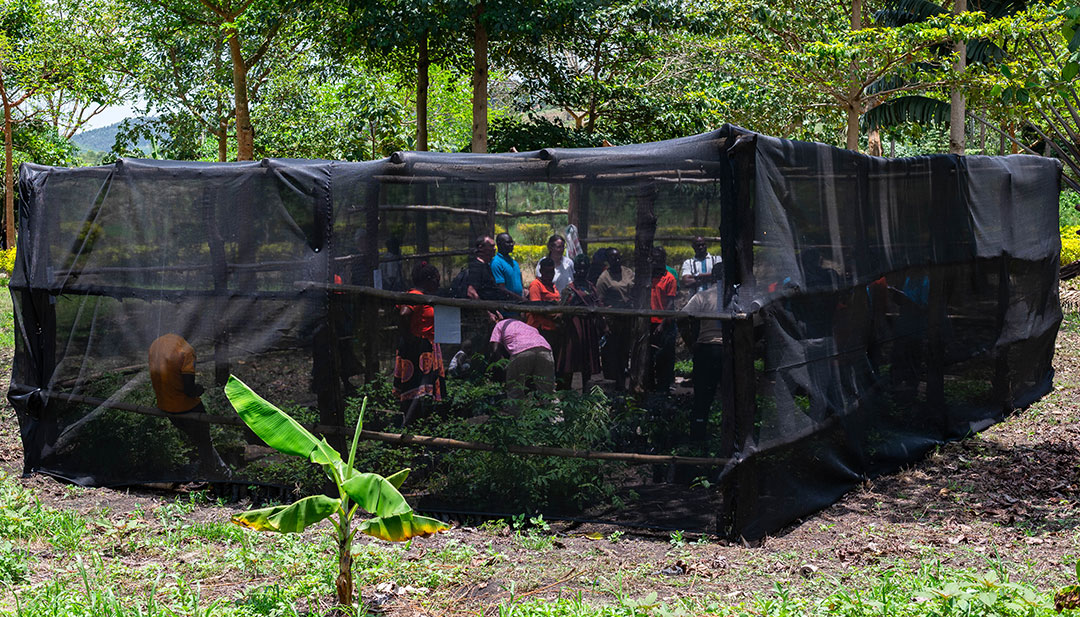
Tree nursery at Kikandwa
A major intervention was supporting Youth Farmer Field Schools (YFFS) to develop Climate Change Action Plans (CCAPs). Today, 171 of the 180 YFFS (95.8%) have CCAPs, and 168 of those groups (98.2%) are already implementing them. These plans guide youth on practical adaptation measures, including simple irrigation techniques, seasonal planning, agroforestry, and other sustainable farming practices.
Equipped with climate-smart agricultural skills, youth are applying practical solutions that are helping them protect their farms and sustain production despite the harsh weather.
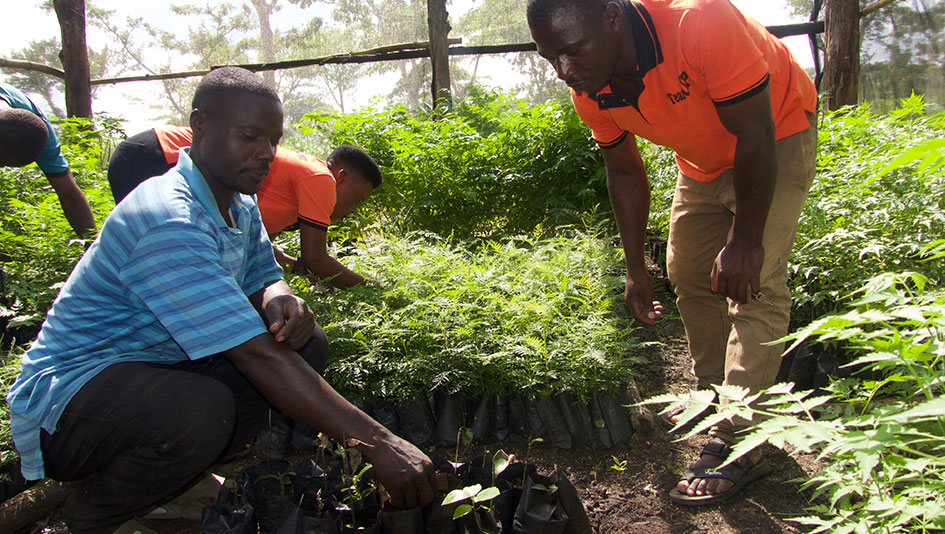
TeamUp supported youth groups to establish tree nurseries that raise different species of shade trees, making seedlings readily available to members and neighbouring farmers. As more shade trees are planted, coffee gardens are becoming better protected from extreme heat, while soil moisture is conserved and biodiversity enhanced.
“Before the training, I thought there was little I could do when the dry season became severe. Now I intercrop my coffee with bananas, mulch every garden, and have planted shade trees from our group’s nursery. Even though the rains have delayed, my coffee is still healthy because I have learned how to conserve moisture and protect the soil.”
— Gorret Zawedde, TeamUp youth farmer.
Mulching has also become a widely adopted practice. By covering the soil with crop residues and other organic materials, young farmers are retaining moisture, improving soil fertility, and reducing evaporation. During the current dry spell, mulched gardens have remained greener and more resilient than those left exposed.
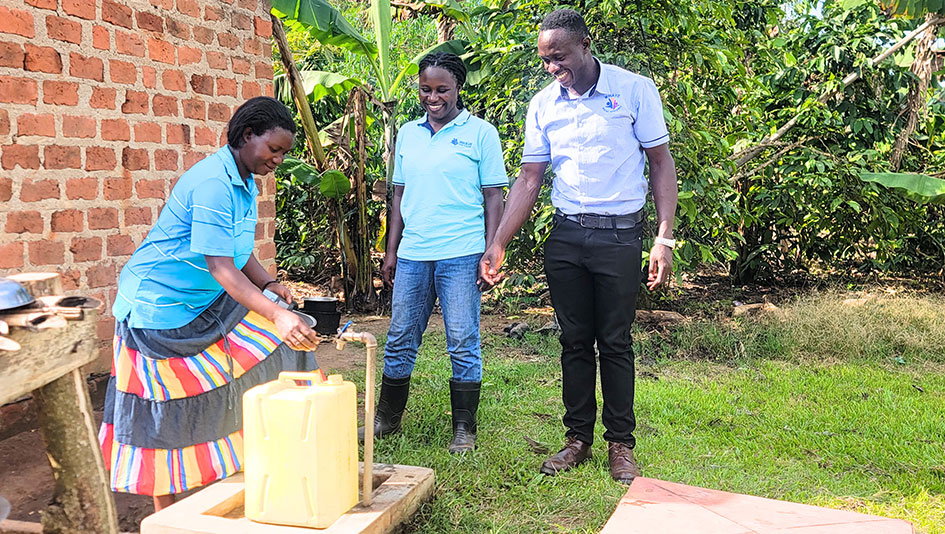
Although modern irrigation systems remain largely unaffordable to small-scale farmers, youth have adopted simple irrigation innovations that fit their circumstances. Some are using recycled plastic bottles to slowly drip water directly to the roots of young coffee and fruit trees, while others harvest rainwater during wet periods for use when rains fail. These affordable solutions are helping to keep perennial crops alive during dry conditions.
“We cannot afford expensive irrigation equipment, but TeamUp showed us that simple technologies can also work. I use recycled bottles to slowly water my young coffee plants, and I store rainwater whenever it rains. These practices have helped me save crops that would otherwise have dried up.“
— Fahad Ssekandi, TeamUp youth farmer
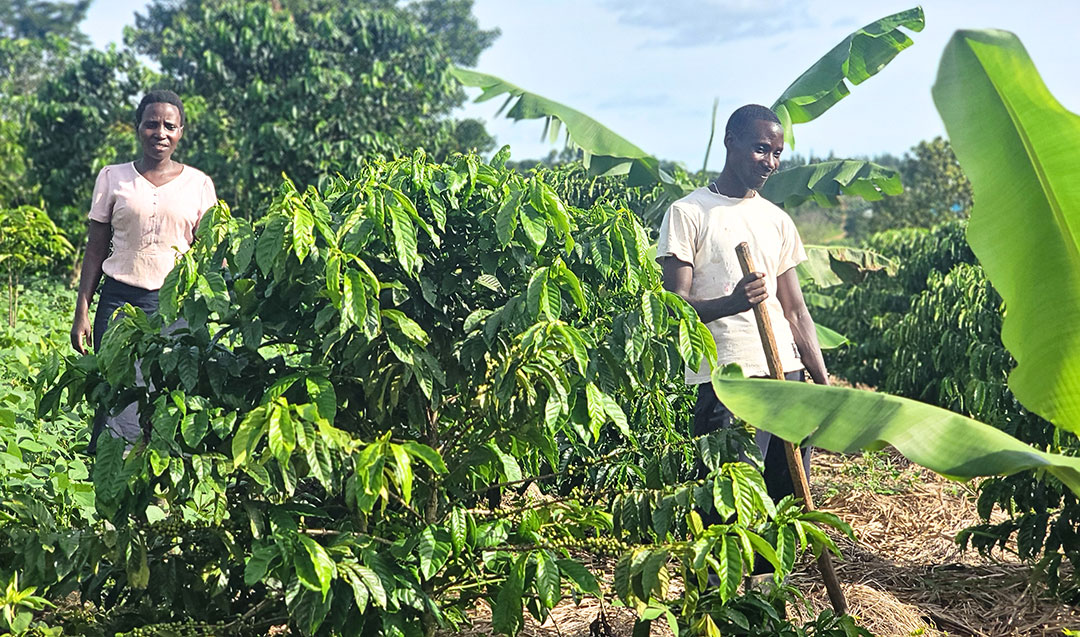
A mulched garden at Ssekanyonyi
Some young people have also become local resource persons, providing paid advisory services on climate-smart agriculture to fellow farmers. By sharing their knowledge on climate adaptation, they are strengthening resilience not only on their own farms but across their communities.
As climate challenges continue to evolve, these young farmers are proving that with the right skills, practical knowledge, and community support, they can adapt, innovate, and continue thriving despite a changing climate.
Checkout the coffee and climate toolbox here by our partners, Hanns R. Neumann Stiftung: https://coffeeandclimate.org/cc-toolbox/