Youth Empowerment Centres (YECs) serve as core implementation hubs established by TeamUp program. These Centres operate at the sub-county level in Mityana and Kasanda districts, with a coordinated structure comprising a General Assembly and an Executive Committee responsible for day-to-day operations guided by a shared work plan. Representation across TeamUp sectors of agriculture, water and health ensures inclusivity.
The YECs play a critical role in coordinating youth structures (Youth farmer field schools, groups and clubs), serving as learning hubs, mobilizing resources, linking youth to health and financial services, supporting project implementation, and monitoring youth activities. There are 12 YECs, each serving youth in one subcounty.
YECs are formally registered with the local government as a Community-Based Organisations (CBO). The YECs maintain active collaboration with the Community Development Officer (CDO) and other local government leaders.
TeamUp’s approach isn’t just about participation. It’s about empowerment through entrepreneurship. With grants through A4HU and local investment from youth groups, the YECs are running promising youth-owned and youth-managed businesses that generate income and employment.
Here are some success stories from the field:
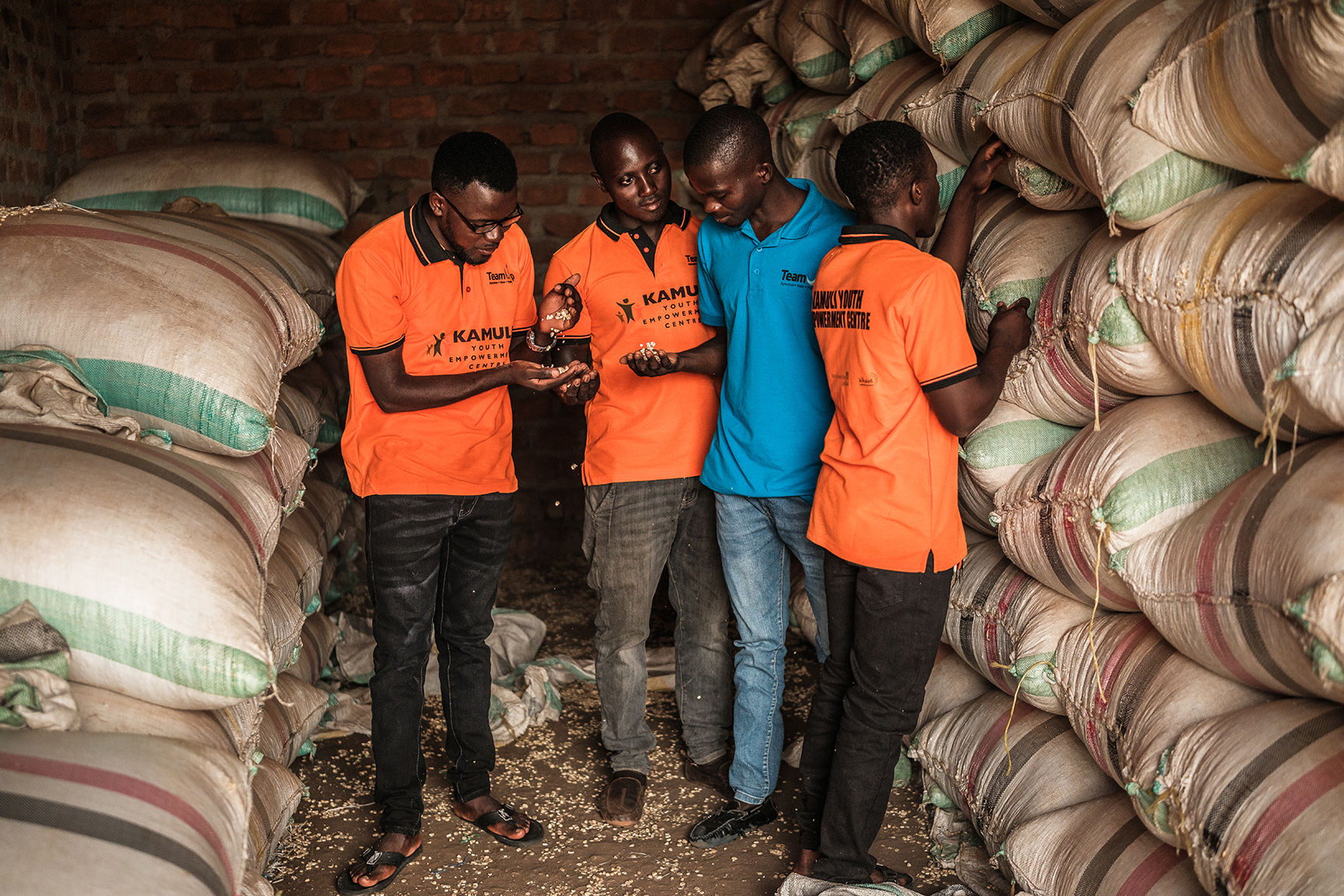
From left, John Bosco Mukiibi, Henry Muyanja, Jackson Lukenge (in blue shirt) and Daniel Katongole in the YEC maize store
To promote sustainability and collective ownership, the YECs are now selling shares to youth clubs in their agro-input shops. This model generates revenue through dividends and nurtures accountability and engagement.
“When youth buy shares, they’re not just investing in a business—they’re investing in their future. It teaches responsibility, financial literacy, and teamwork,”Says Peter Kaweesa, a member of Kakindu YEC.
YECs submit monthly business performance reports, and all transactions are recorded and accessible, ensuring transparency for youth investors and stakeholders. Despite being in the early stages, some enterprises are already turning a profit.
With plans to engage more private sector partners, youth groups, and local companies, the Youth Empowerment Centres are positioning themselves as community-owned institutions for sustainable youth-led development. By combining service delivery, entrepreneurship, and strong local governance, YECs are proving that when young people are empowered, they benefit from development and lead it as well.