TeamUp is a pioneering multi-sectoral approach to development cooperation, initiated by the German Federal Ministry for Economic Cooperation and Development (BMZ) and jointly managed and co-financed by the three foundations of Deutsche Stiftung Weltbevölkerung (DSW), Hanns R. Neumann Stiftung (HRNS), and Siemens Stiftung. The program unites the expertise, networks, and resources of three local implementing partners Action 4 Health Uganda (A4HU), Hanns R. Neumann Stiftung Africa (HRNS), and Whave Solutions delivering integrated interventions across the sectors of health, agriculture, and Water, Sanitation and Hygiene (WASH). Implementing in Mityana District and Kassanda, Central Uganda and replicating in Nakaseke, Kikuube and Kyegegwa, TeamUp takes a holistic approach to address the complex challenges faced by young people, integrating socio-economic, health, educational, and infrastructural dimensions to improve livelihoods, health outcomes, and resilience. The program targets 9,024 in-school and out-of-school youth aged 15–30 and their families.
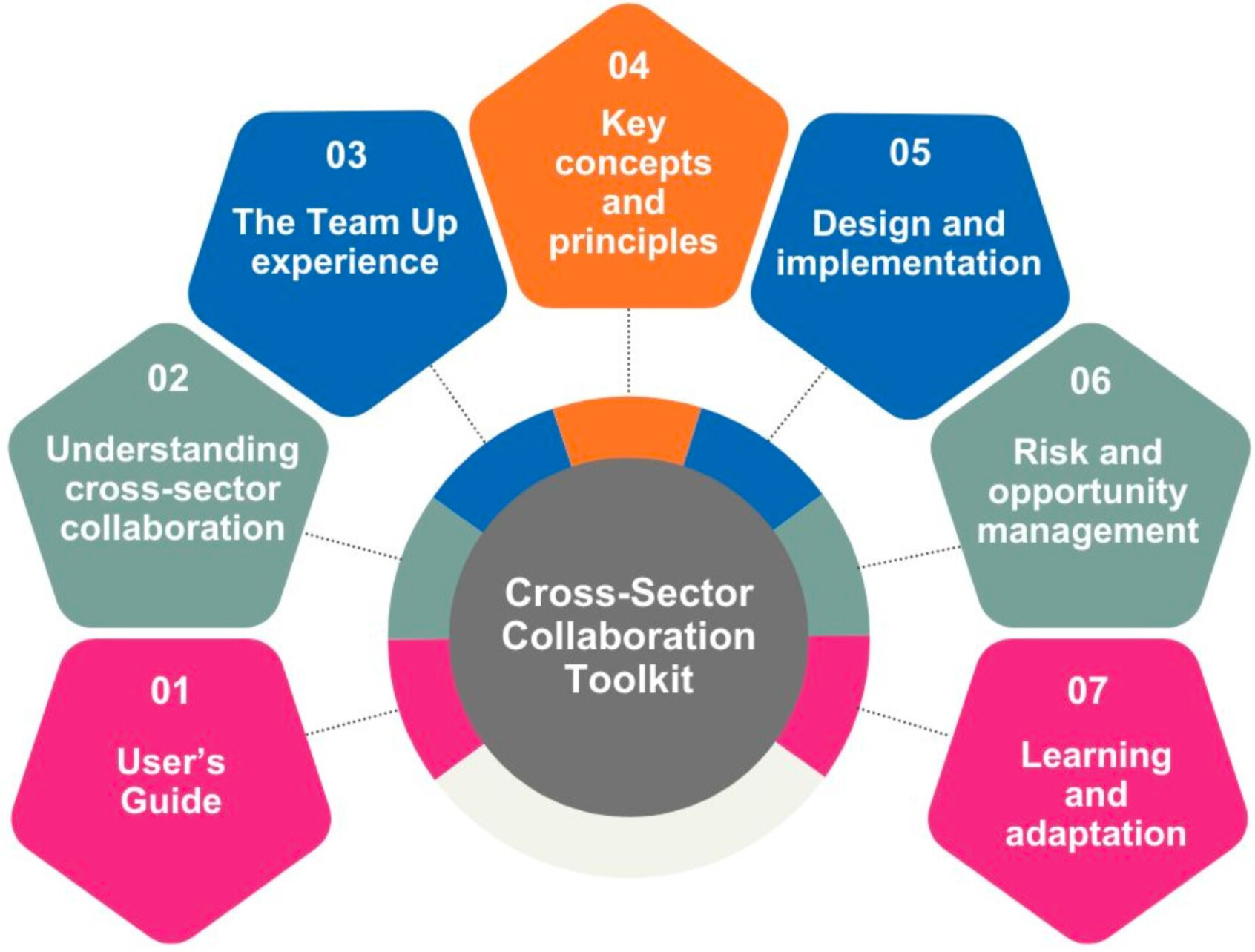
Cross-sector collaboration has become a vital approach to tackling complex development challenges that cut across health, agriculture, and water access and other sectors. For collaboration to be effective, stakeholders must be understood not only in terms of their sectoral expertise but also their interests, capacities, and level of engagement. The Cross-Sector Collaboration Management Framework and toolkit provide a structured process to map and understand the stakeholder ecosystem, align roles and interests across sectors, engage stakeholders based on reciprocity and mutual value and identify and leverage resources for shared impact.
Through the Cross-Sector Collaboration Management Framework and toolkit, TeamUp has successfully engaged a wide range of actors to strengthen coordination and collaboration at both regional and national levels. At the local level, the program has worked with governments in five districts to institutionalize collaborative practices and with potential replicating organizations to extend the model beyond the initial areas of implementation. Nationally, TeamUp has partnered with the Ministry of Gender, Labour and Social Development to support the coordination mechanism for youth programs and with the Ministry of Agriculture, Animal Industry and Fisheries, alongside other partners, to establish Uganda’s Climate Smart Agriculture Multi-Stakeholder Platforms. These efforts have contributed to the creation of vibrant regional and national Communities of Practice, all guided by the framework and toolkit, which serve as practical references for designing processes and structures that foster effective, inclusive, and sustainable collaboration.
To strengthen learning and practice, this webinar is intended to share experiences, lessons, and insights on applying the framework within the TeamUp Program and beyond.