Approach

Measuring of success of TeamUp Uganda is on the ability of the three implementing partners to work together in a multi sectoral format that improves the livelihood prospects of young people in rural East Africa. Throughout program implementation, successes and challenges are documented continuously and carefully with a scale up of TeamUp the ultimate goal that ensures integration of lessons learned. TeamUp will directly benefit 50,000 youth aged between 15 to 30 years.

Cross-sector collaboration:

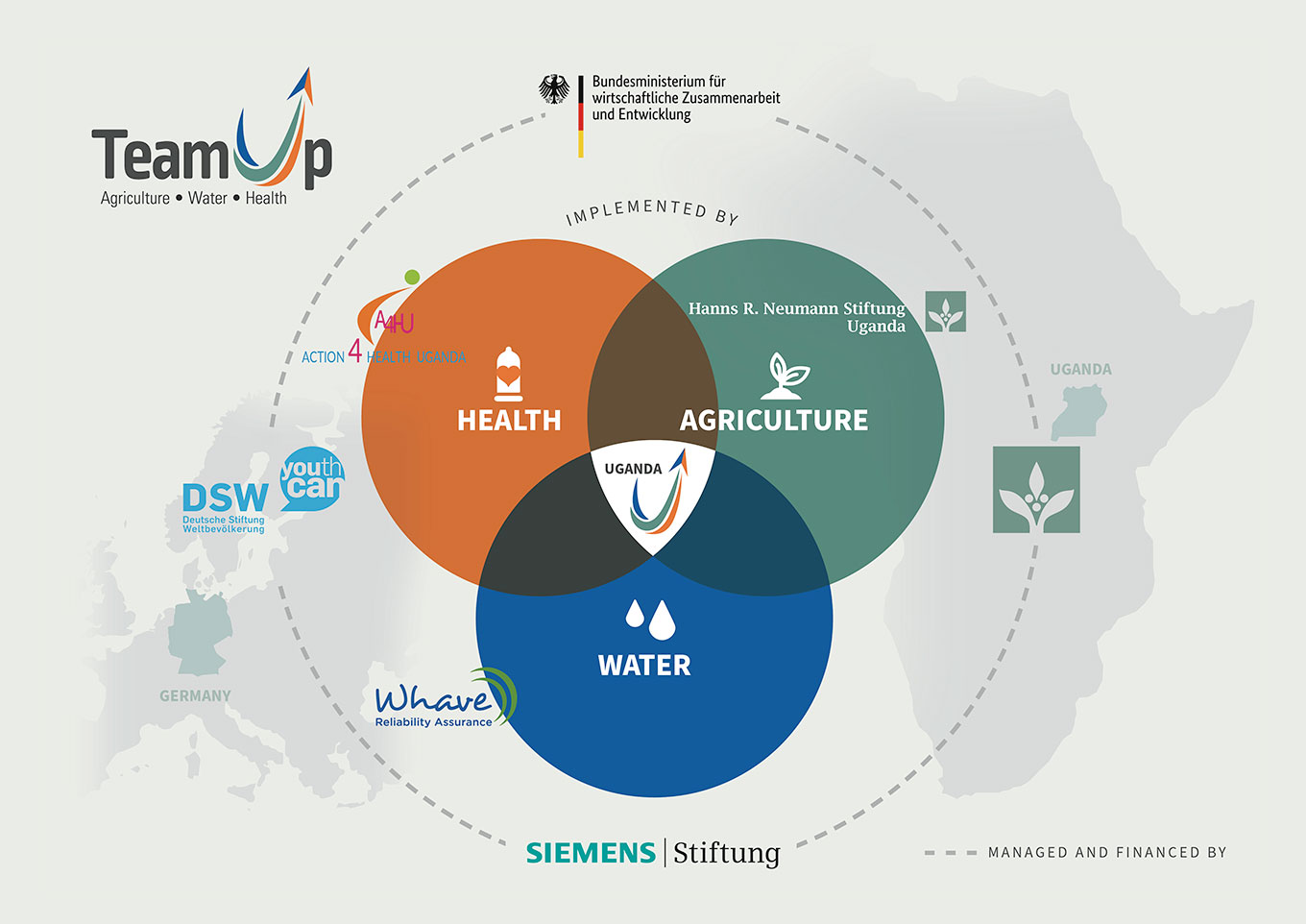
TeamUp combines the expertise of three local implementing partners (IPs) in agriculture, water and health, national-level stakeholders from the public, private and civil society domains, and international partners to formulate a coordinated and collaborative approach to development cooperation. 

Shared identity:

TeamUp implementing partners complement each other towards achieving the shared goal through synergistic interactions during planning, implementation, monitoring and reporting. The identity of the TeamUp program takes precedence over that of individual IPs to achieve collective attribution of results to the program.  

Holistic benefits:

The implementing partners move in sync at all stages and levels of the program to deliver a holistic package of interventions to the target population in all the three sectors (agriculture, water, health) and other cross-cutting issues such as gender to cause positive changes in the quality of life of individuals, households and entire communities.

Replication:

TeamUp is designed for long-term cooperation, scientifically monitored, evaluated, and open to new partners. Good practices and lessons learned will be evaluated and exchanged with other program partners to benefit future joint programs. A total of 64 stakeholders at regional and national level were sensitised to the TeamUp Uganda approach.
Water

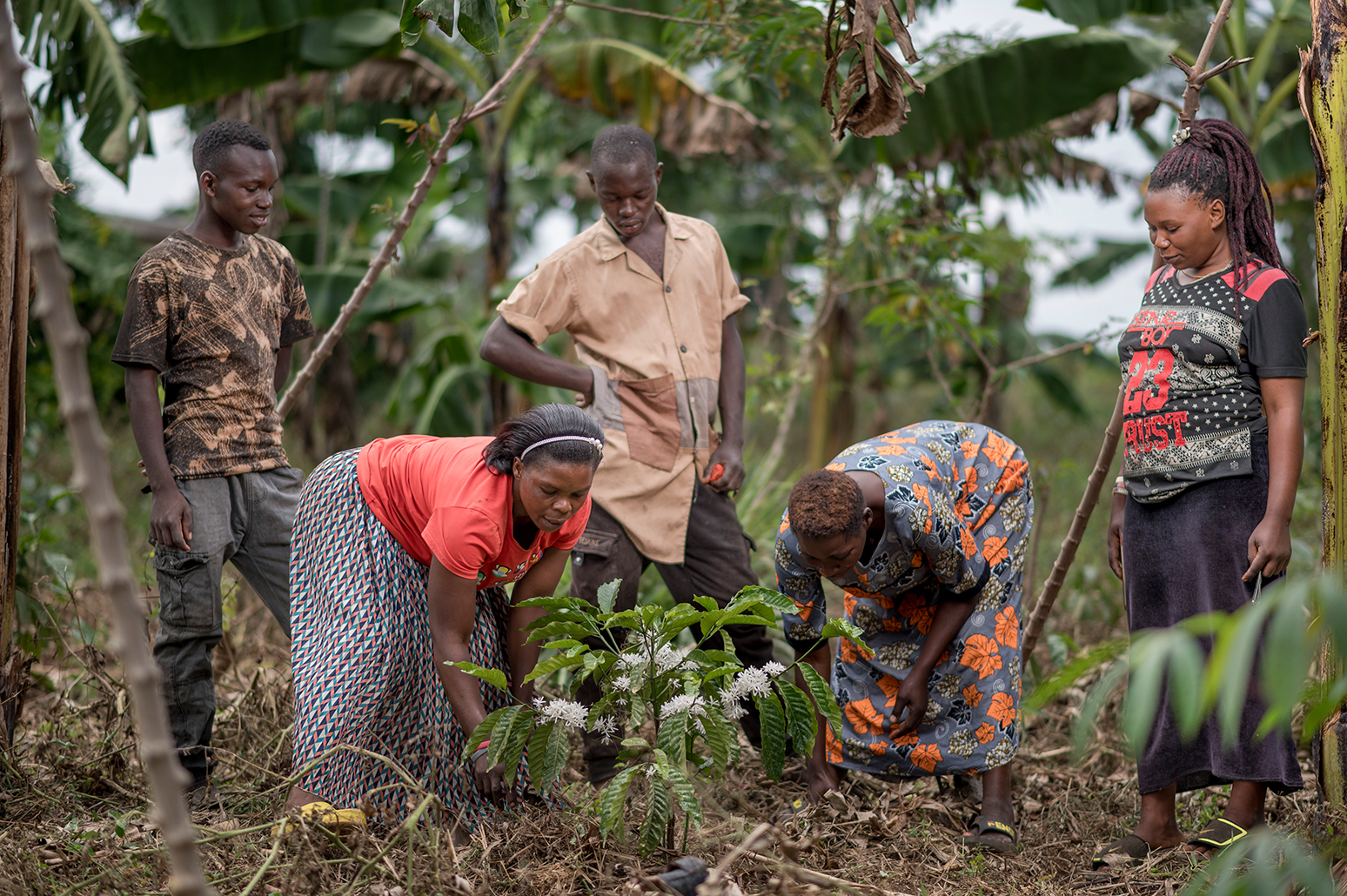
Improving access to safe and clean water  as well as sanitation and hygiene through;
How the Consortium Works

Health and WASH
  • Creation of comprehensive education on SRHR​ and family planning
  • Raising awareness of WASH​ practices
  • Safe access to​ clean drinking water
  • Access to sanitation
  • Improving the agricultural skills​ of young people
  • Improving young people’s​ entrepreneurial skills
  • Creating access to​ financial services
  • Opening up markets​ for young people
  • Strengthening the political engagement ​ of young people
  • Strengthening the involvement of​ young people in decision-making
  • Promoting a gender-sensitive​ environment
  • Joint office in Mityana District.​
  • “Shared” resources (e.g. gender & office management employees).​
  • The implementation partners organize workshops, campaigns and trainings together , if possible – and thus save costs and the time of all participants.
  • Joint action of the partners at the district level; this gives more weight to individual partners & their topics.​
  • Barriers to entry in communities have been shown to decrease due to the close cooperation of the partners, e.g. Whave in the TeamUp communities needs significantly less preparation time for their approach than in other areas.​
  • Expanding their own networks is also beneficial for the target group: this opens up larger markets and new educational opportunities for young people, among other things.​
  • Improving the agricultural skills​ of young people
  • Improving young people’s​ entrepreneurial skills
  • Creating access to​ financial services
  • Opening up markets​ for young people
  • Strengthening the political engagement ​ of young people
  • Strengthening the involvement of​ young people in decision-making
  • Promoting a gender-sensitive​ environment
  • Joint office in Mityana District.​
  • “Shared” resources (e.g. gender & office management employees).​
  • The implementation partners organize workshops, campaigns and trainings together , if possible – and thus save costs and the time of all participants.
  • Joint action of the partners at the district level; this gives more weight to individual partners & their topics.​
  • Barriers to entry in communities have been shown to decrease due to the close cooperation of the partners, e.g. Whave in the TeamUp communities needs significantly less preparation time for their approach than in other areas.​
  • Expanding their own networks is also beneficial for the target group: this opens up larger markets and new educational opportunities for young people, among other things.​

Community of Practice

The TeamUp Community of Practice was established when the TeamUp Uganda program adopted the National Youth Coordination Mechanism (NYCM), which was created by the Ministry of Gender, Labour and Social Development (MoGLSD) to coordinate youth programmes and serve as a platform for networking.

TeamUp uses the platform as a starting point for scaling up the cross-sector collaboration  approach. Here, 60 potential replication organisations (PROs) actively participate at regional and national level.

TeamUp developed the cross-sectoral collaboration management framework to guide the criteria for the inclusion into the PROs, and strategies for effectively collaborating with the PROs to maximise synergetic effects. Profiling all the potential PROs that meet the inclusion criteria is ongoing.